
Blog
The cost of a small production run - why the unit price rises
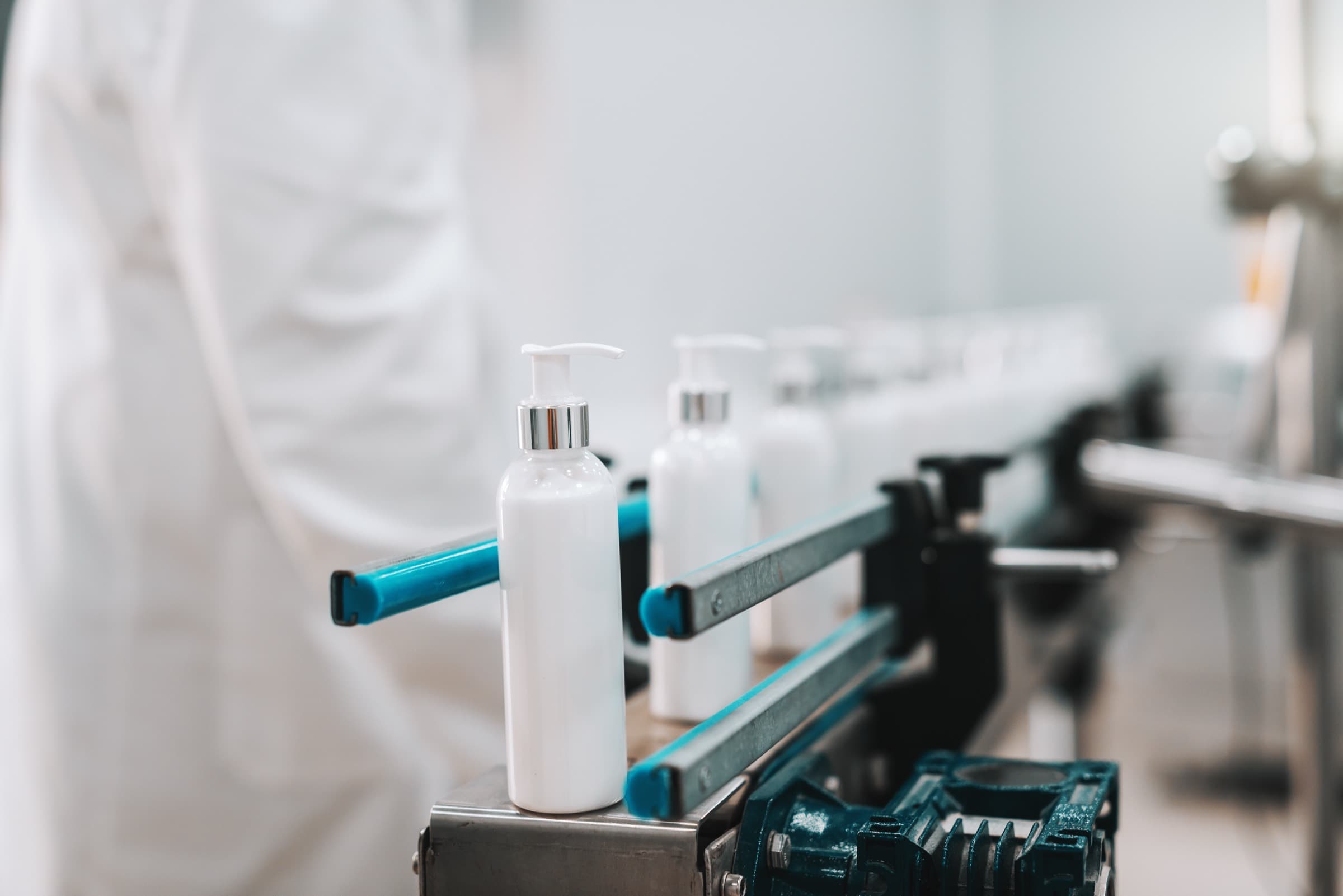
Unit costs for a small batch of perfumes, pheromones or intimate gels rise because fixed set-up outlays are spread across fewer finished units. The spend on a bottle mould or on setting up a machine stays the same whatever the batch size. The result is a higher price per unit when an order covers 300-500 packs rather than the optimal few thousand. Understanding these mechanics makes it far easier to plan a realistic launch budget.
Why does the unit price rise on small production runs?
Producing a single unit in a 300-pack order can cost twice as much as in a batch above 5,000 units. The main reason is the unchanging charge for starting up the filling line. Machines need calibration, and that takes the technical team the same amount of time for a few dozen bottles as it does for a few thousand.
Contract cosmetics manufacturing calls for a start-up budget that covers print matrices, among other things. Printing a very small run of labels or gold-foiled boxes pushes up the final price of each individual product. Most factories point to 1,000 units as the market Minimum Order Quantity (MOQ). Accepting anything lower means accepting a higher amount per finished unit.
How does formula complexity affect the cost of developing a cosmetic?
Creating a unique fragrance formula is an outlay in the range of PLN 5,000 to 15,000. That amount covers the technologist's work, the raw materials used in laboratory trials and the final balancing of the composition. A complex project takes many iterations, and every correction and repeat test increases the total financial outlay on product development. Additional testing of the finished cosmetic mass brings a further PLN 5,000-7,000.
In our practice, technical documentation rests on physicochemical analyses. The more concentration variants or fragrance notes a brief contains, the longer the implementation stage runs, because testing fees have to be multiplied by the number of planned variations.
How does the type of packaging change the cost of a finished run?
Making a bespoke glass mould for a bottle is an outlay counted in thousands of złoty. A non-standard bottle shape forces a new matrix to be designed at the glassworks. On small runs, charges like these push the price of an individual perfume to an unviable level.
Standard bottles available from wholesale catalogues remove that problem. Ready-made designs avoid matrix charges and speed the order up. Filling and packing small batches is often done by hand or on semi-automatic machines, which slows the work down and takes more staff time.
| Project element | Standard approach | Bespoke approach |
|---|---|---|
| Bottle | Ready-made catalogue design | Needs an expensive glassworks matrix |
| Decoration | Self-adhesive label | Screen printing applied to the glass |
| Carton | Standard cutting die | Bespoke box construction |
| Lead time | Short (materials available off the shelf) | Long (prototypes have to be made) |
Why do pheromones and intimate gels require extra testing?
Preparations in this category must hold the right pH without exception, within a narrow 3.5-4.4 range. That value determines physiological compatibility with the skin and mucous membranes. Pheromones and gel formulas also go through extended stability testing. Trials in ageing chambers verify how the cosmetic mass reacts to temperature changes and UV exposure.
Choosing the right packaging material decides whether the product succeeds on the market, because some plastics react chemically with the active substances. Compatibility testing confirms that the gel will not separate and that the dosing pump keeps working. Laboratory procedures take time, but they protect the product from losing its properties.
What information is needed for a reliable cost estimate?
Costing rests on a detailed product brief. Without precise data, the technologist is left quoting wide price ranges. In our production practice, we set the quote on the hard technical data the client supplies.
A full cost estimate calls for several pieces of information:
- Planned volume (MOQ) - the exact number of units in the first production batch.
- Packaging type - the preferred glass or plastic, the atomiser and cap model.
- Composition complexity - whether the fragrance is built from scratch or on a ready base.
- Number of variants - how many different fragrance versions the run should hold.
- Target market - the region of planned sales, which drives the documentation requirements.
Complete data lets work on the formula begin quickly.
When does a simpler product specification pay off most?
A test budget and a run below 1,000 units are best served by ready fragrance bases and catalogue bottles. Keeping the variable elements to a minimum frees up money for marketing. A simpler formula and standard components cut fixed costs and shorten implementation from several months to a few weeks. Limiting the choice to one strong variant also makes stock easier to manage.
Entering the market with a complicated business model raises the investment risk, so testing demand on a basic line makes it easier to extend the portfolio later. Investment in bespoke glass moulds becomes worthwhile once sales cover the spend on running a separate line.
If you would like to cost your project and check whether a small production batch stacks up, get in touch and we will gladly help you choose the right components.
A small run raises the unit price because start-up, calibration, testing and packaging preparation are spread across fewer units. Cost is also driven by formula complexity, the number of trials, the choice of bottle and carton, and the way the batch is filled and packed. Pheromones and intimate gels call for extra stability testing and careful material selection. A simpler specification and standard components usually make better economic sense at a low MOQ.
FAQ
Why does a small batch of perfume cost more per unit than a larger run?
A small batch spreads the same fixed costs across fewer products. This is mainly about starting up the line, calibrating machines, preparing labels and packaging, and organising production. At a higher volume the unit cost falls, because those outlays are spread across more units.
What raises the cost of developing a new fragrance the most?
Cost is driven above all by the number of laboratory trials and the complexity of the formula. Every iteration means raw materials used, technologist's time and another round of testing. Additional fragrance variants or concentrations also add to the implementation cost.
Is a bespoke bottle always more expensive than a standard one?
A bespoke bottle is usually more expensive, because it needs its own matrix and an extra design stage. Standard catalogue bottles carry no such cost and reach production faster. On small runs that is often the more economical route.
Why do pheromones and intimate gels require extra testing?
Pheromones and intimate gels have to hold a stable composition, the right pH and compatibility with their packaging. They are checked for resistance to temperature, shelf life and contact with the bottle or pump material. This lowers the risk of separation, changed properties or loss of quality.
What details do you need to give to get a sensible production quote?
You need the planned volume, the packaging type, the number of variants, and whether the formula is to be built from scratch or on a ready base. The target market matters too, because it affects the documentation requirements. The more precise the brief, the more precise the quote.